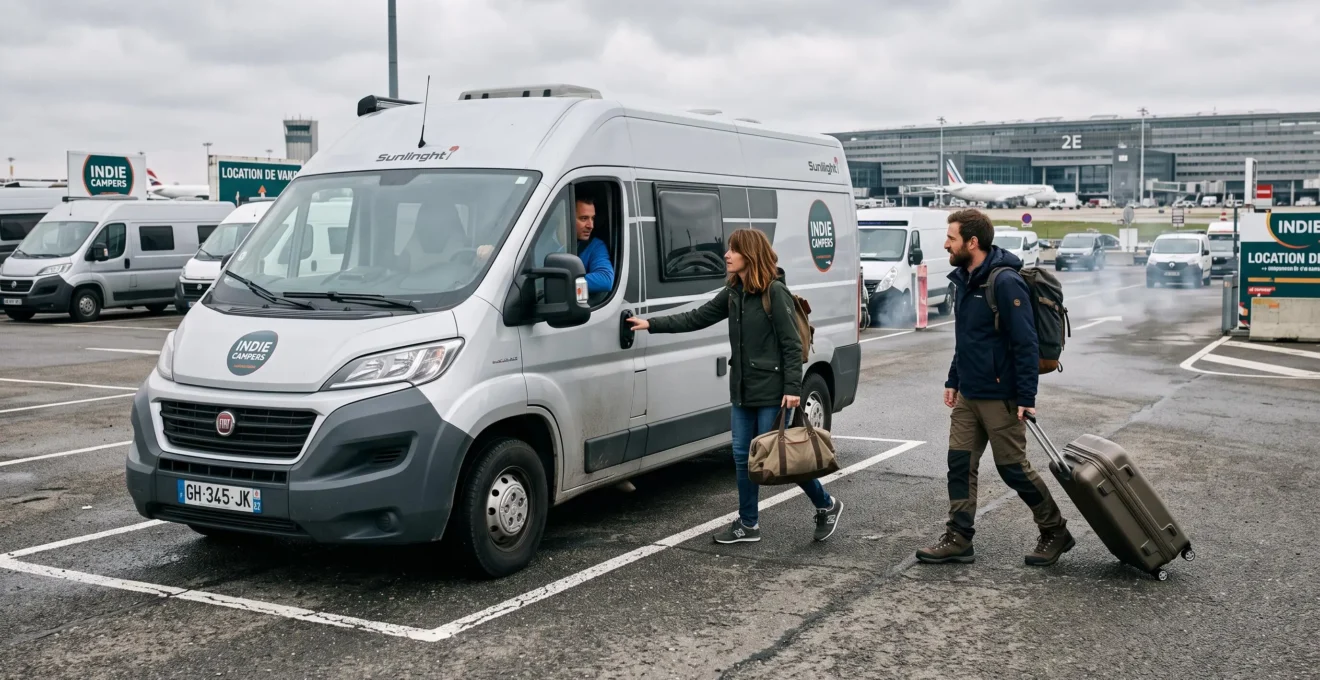
You have just landed at Paris-Charles de Gaulle with your bags, a flight behind you and a van waiting somewhere near the airport. The question is simple: where do you go, who do you meet and what do you need to show to drive away the same day? This guide walks you through the practical steps of picking up a campervan at CDG, choosing the right model, reading your insurance and deposit terms, and planning a realistic first leg out of the airport.
Direct answer: Picking up a campervan at CDG works smoothly when you book in advance, confirm the exact meeting point and shuttle details with the rental company, and arrive with your driving licence, a credit card in the main driver’s name and your booking voucher.
What matters most before you fly
- Confirm the pickup address and whether a shuttle serves the terminals.
- Match the opening hours to your actual landing time, not your scheduled one.
- Check deductible, deposit amount and exclusions before signing.
- Bring driving licence, credit card in the driver’s name and booking voucher.
- Plan a first destination within 2 to 3 hours of CDG to avoid long first-day driving.
How campervan hire at Paris-Charles de Gaulle works
Most rental companies do not operate a desk inside the CDG terminals themselves. Campervan pickup usually happens at a depot located in the surrounding area, and you reach it either by a dedicated shuttle, a short taxi ride, or sometimes a direct delivery to a meeting point near a terminal. Confirm the exact format in your booking confirmation before boarding your flight.
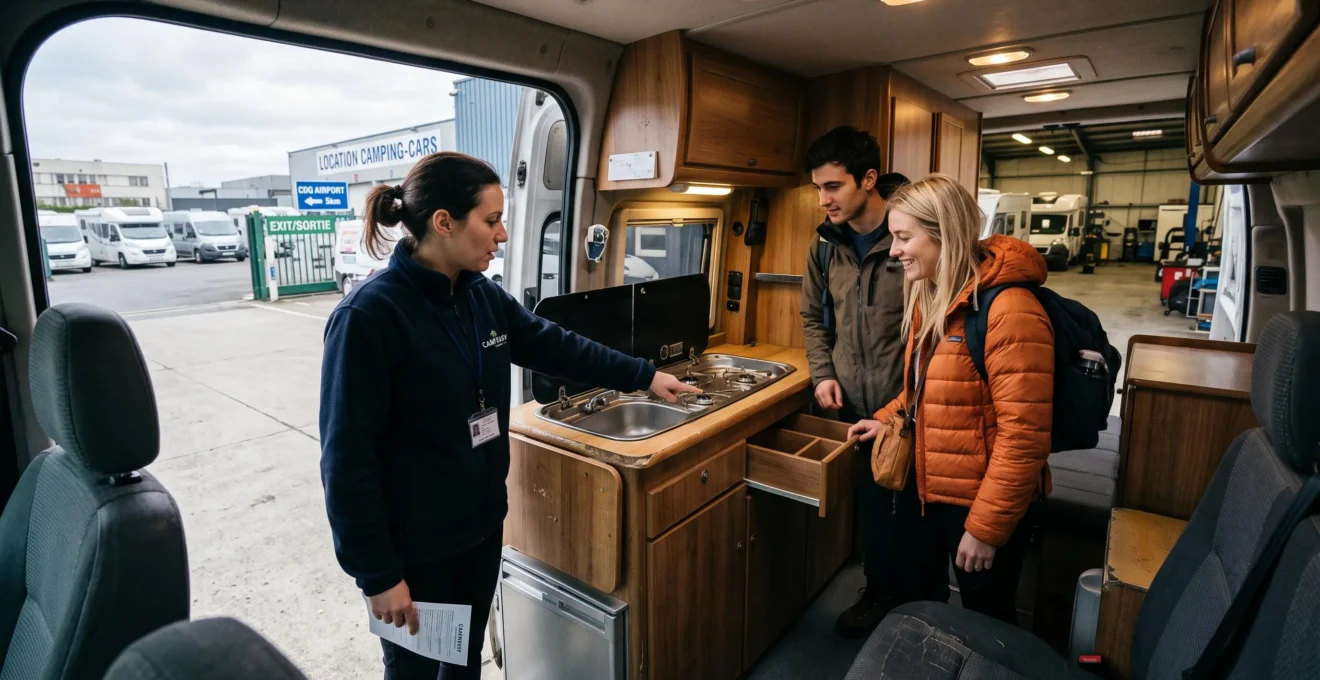
There are two common pickup setups to understand. The first is depot pickup: you take a shuttle or taxi from your terminal to the rental yard, where the agent inspects the van with you and hands over the keys. The second is airport delivery, where an agent brings the vehicle to a designated point near a terminal at an agreed time. Services such as campervan hire at Paris-Charles de Gaulle are built around this airport logistics, which saves a hotel night when you land late.
Meeting point, shuttle and opening hours
Opening hours vary from one rental company to another, and late evening or Sunday pickups are not always available without a surcharge or a pre-arranged slot. Before you book an evening flight, write to the rental team with your actual arrival time and ask them to confirm, in writing, the latest pickup slot they can hold. If your flight is delayed, call the depot as soon as you have signal in the terminal.
Documents and licence requirements
At the counter, the agent will typically ask for your driving licence, an ID or passport, a credit card in the main driver’s name and your booking voucher. Non-EU travellers should check whether an international driving permit is required in addition to their national licence. France’s DGCCRF car rental guidance requires the rental company to hand over a written quote detailing deductibles and insurance terms before you sign, so take a moment to actually read it.
Which campervan should you choose for your trip?
The right model depends on three questions: how many of you will sleep in the van, how many will travel in it during the day, and where you plan to drive. A compact converted van is easy to park in cities and villages, while a larger motorhome offers more comfort for a family on a long tour but is less agile on narrow roads.
Watch the gap between sleeping berths and travel seats with seatbelts. A van sometimes sleeps four but only carries two or three passengers legally during driving. Transmission matters too: if you are not used to manual gearboxes, an automatic reduces fatigue in Paris traffic and on motorway merges. On-board equipment (fridge, cooker, toilet, shower) is worth paying for on trips over a week, but can be dispensed with for short city-to-city hops.
| Criterion | Compact van (2 people) | Family motorhome (4-5 people) |
|---|---|---|
| Travellers | Couple, two friends | Family or small group |
| Driving comfort | Easy in cities and villages | Requires planning for parking |
| Equipment | Kitchenette, sometimes no toilet | Kitchen, toilet, often shower |
| Best for | Short trips, urban stops | Longer tours, rural stays |
Insurance and deposit: what you need to check before signing
Before you drive out of the depot, two documents matter more than any other: the insurance summary and the deposit authorisation. The base insurance always comes with a deductible, called the franchise in French contracts, which is the amount you keep paying in case of damage or theft. Optional cover reduces or eliminates that deductible for an extra daily fee.
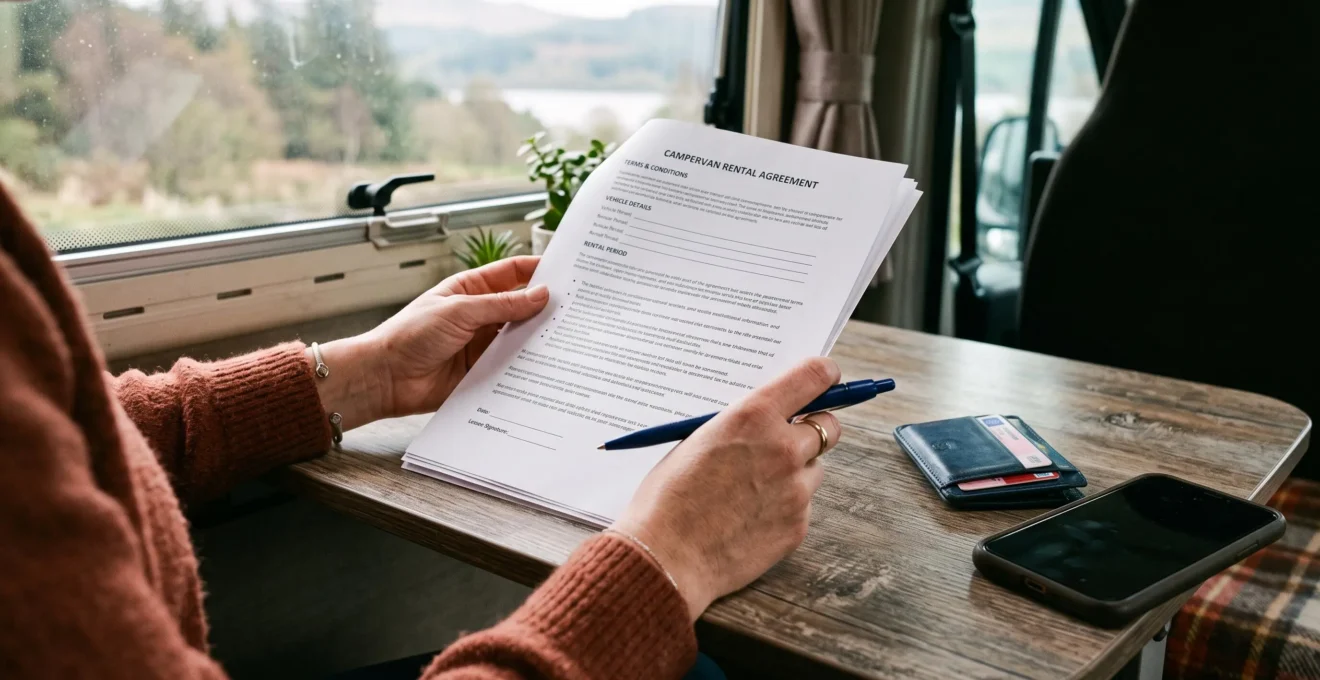
The deposit is usually blocked on the main driver’s credit card as a pre-authorisation. The exact amount depends on the model and the chosen cover: a larger motorhome or a reduced-deductible option changes the figure significantly. Ask for the precise amount in euros before you commit, and make sure your card limit can absorb it on top of your other travel expenses.
Points to check line by line in the contract
- Third-party liability on public roads
- Collision damage above the deductible
- Theft of the vehicle, subject to conditions
- Assistance in case of breakdown
- Tyres, windscreen and glass
- Roof, awning and upper bodywork
- Interior damage and lost accessories
- Off-road driving and ferry transfers
Additional drivers must be declared and named on the contract, otherwise the cover may not apply if they are driving at the moment of an incident. If you hold a non-EU licence, confirm whether an international driving permit is needed. French consumer authorities inspect this type of information regularly: the French rental disclosure compliance check published by the Institut National de la Consommation reports that a significant share of rental outlets inspected in 2020 failed to display proper information at the pickup location, which is one more reason to request everything in writing.
Watch the deposit release: a pre-authorisation can take several days or weeks to unblock on your card after you return the van. Factor that in if you rely on the same card for your trip.
Where to drive first from CDG?
Charles de Gaulle sits northeast of Paris, directly connected to the A1 motorway toward the north and well linked to the A4 toward the east. That geography makes short first legs genuinely easy: you can reach the Hauts-de-France coast, the Belgian border or the Champagne vineyards within a few hours, without crossing central Paris.
For a first night close to the airport, aim for a destination within two to three hours of driving so you still enjoy the evening. The drive from Paris to Lille, for instance, covers around CDG to Lille driving time of about 2h20 for 220 kilometres according to ViaMichelin, which is a realistic first evening after landing.
- North to the Opal Coast or Belgium
Straight shot up the A1 toward Lille, then on to the Channel coast or Bruges. Flat, well-signposted driving for a first evening in the van.
- West toward Normandy
A longer first day via the Paris ring road or northern bypass, rewarded by beaches, cliffs and food stops within a weekend.
- East toward Champagne and Alsace
The A4 opens up Reims within about 1h30, then Strasbourg for a longer loop combining vineyards and old towns.
Longer tours such as a Normandy-Brittany loop over a week, or a slow descent toward the Loire Valley, remain accessible from CDG but benefit from an overnight stop before diving into the full itinerary. The point is to avoid stacking a long-haul flight with a six-hour drive on day one.
Booking checklist for a smooth airport pickup
Most of the friction travellers describe at CDG pickup comes from avoidable details: an incorrect credit card holder, a missing international permit, or a flight landing after the depot closes. A short checklist, built before you leave and reviewed on landing, removes most of the risk.
- Two weeks before departure:
Book the van, confirm the pickup address, request opening hours in writing and declare every additional driver.
- The day before the flight:
Pack your driving licence, international permit if needed, booking voucher and credit card in the main driver’s name.
- On landing at CDG:
Message the depot with your arrival terminal, ask for the shuttle or meeting point and confirm your estimated arrival time.
- At the depot:
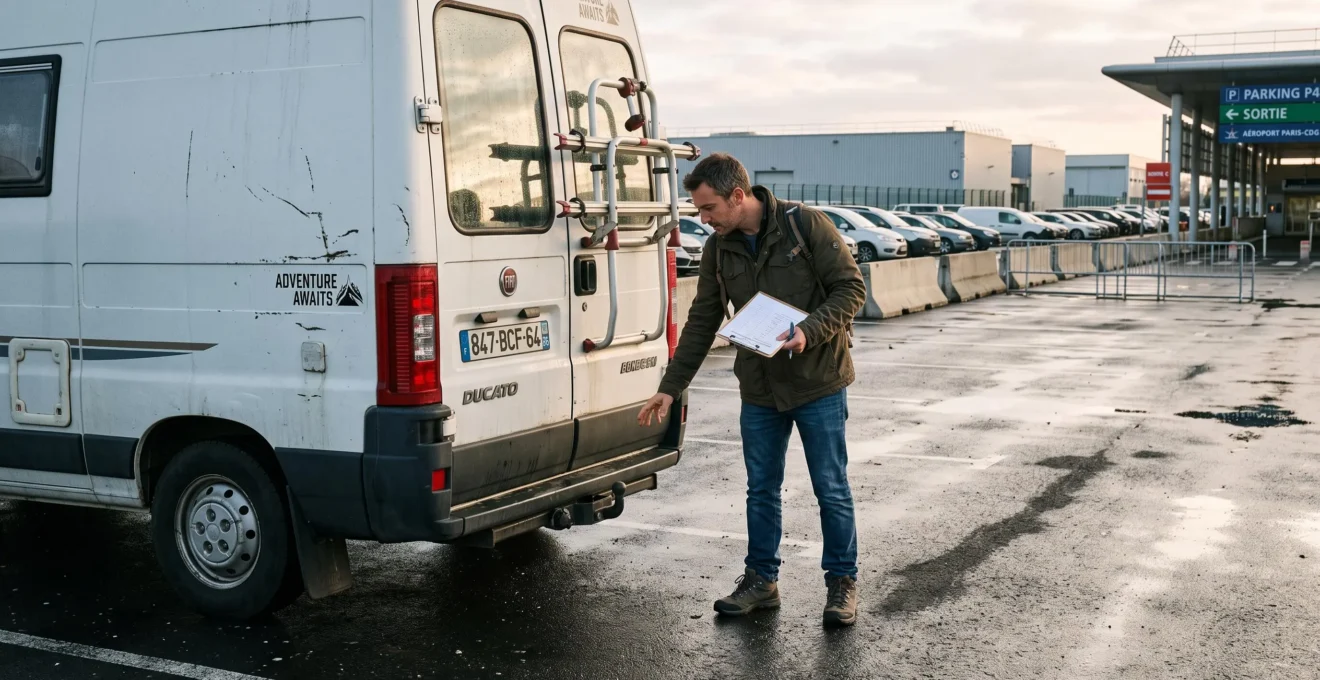
Do the walk-around with the agent, photograph existing damage, test lights, water and gas, and read the deductible section before signing.
If your flight lands late in the evening, consider spending the first night in an airport hotel and picking up the van the next morning. The small extra cost often buys a safer, calmer start than driving a new vehicle after a long-haul flight. Travellers who like to plan the financial side of their trip can also read this travel insurance guide for a broader view of how vehicle cover fits into trip budgets.
Can I pick up a campervan at CDG right after landing on an evening flight?
Sometimes yes, but only if the rental company confirms a late slot in writing before you fly. Many depots close in the early evening; a late pickup may require a surcharge or an airport delivery arrangement. If your flight lands after the confirmed cut-off, plan an airport hotel and collect the van the next morning.
Which campervan should I choose for a family trip with automatic transmission?
For a family of four or five, a motorhome with a dedicated sleeping area, a toilet and a kitchen is usually the most comfortable choice for trips longer than a week. Automatic transmission is less common on larger motorhomes, so filter availability on that criterion early and expect a higher daily rate than for a manual model.
Do I really need an international driving permit?
It depends on the country that issued your licence. EU and EEA licences are accepted in France without an additional permit. Travellers from outside the EU should check their licence class against French requirements and bring an international driving permit when it is recommended, to avoid any dispute at the depot.
How long does the deposit stay blocked on my credit card?
The pre-authorisation is released by the rental company after the van is returned and inspected, but the actual unblocking on your card depends on your bank and can take several days or weeks. Keep enough available credit for the rest of your trip and ask the agent for the exact release procedure when you sign.
Picking up a campervan at CDG rewards the travellers who prepare the dull details: pickup address, opening hours, deductible, deposit and the licence in your pocket. Get those four things aligned before you board, and the first hours on French roads turn into the start of your trip rather than an extension of your flight.